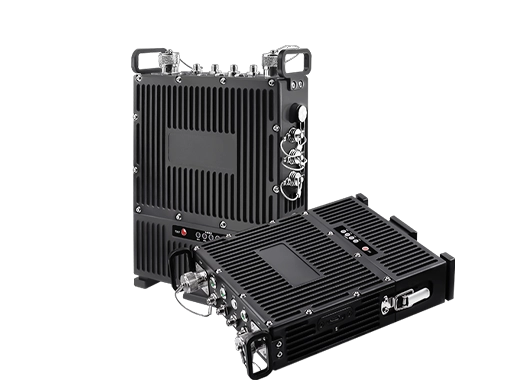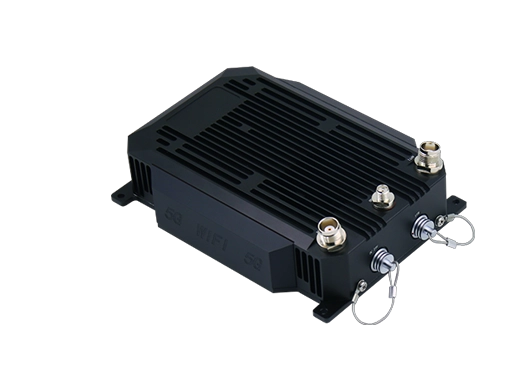


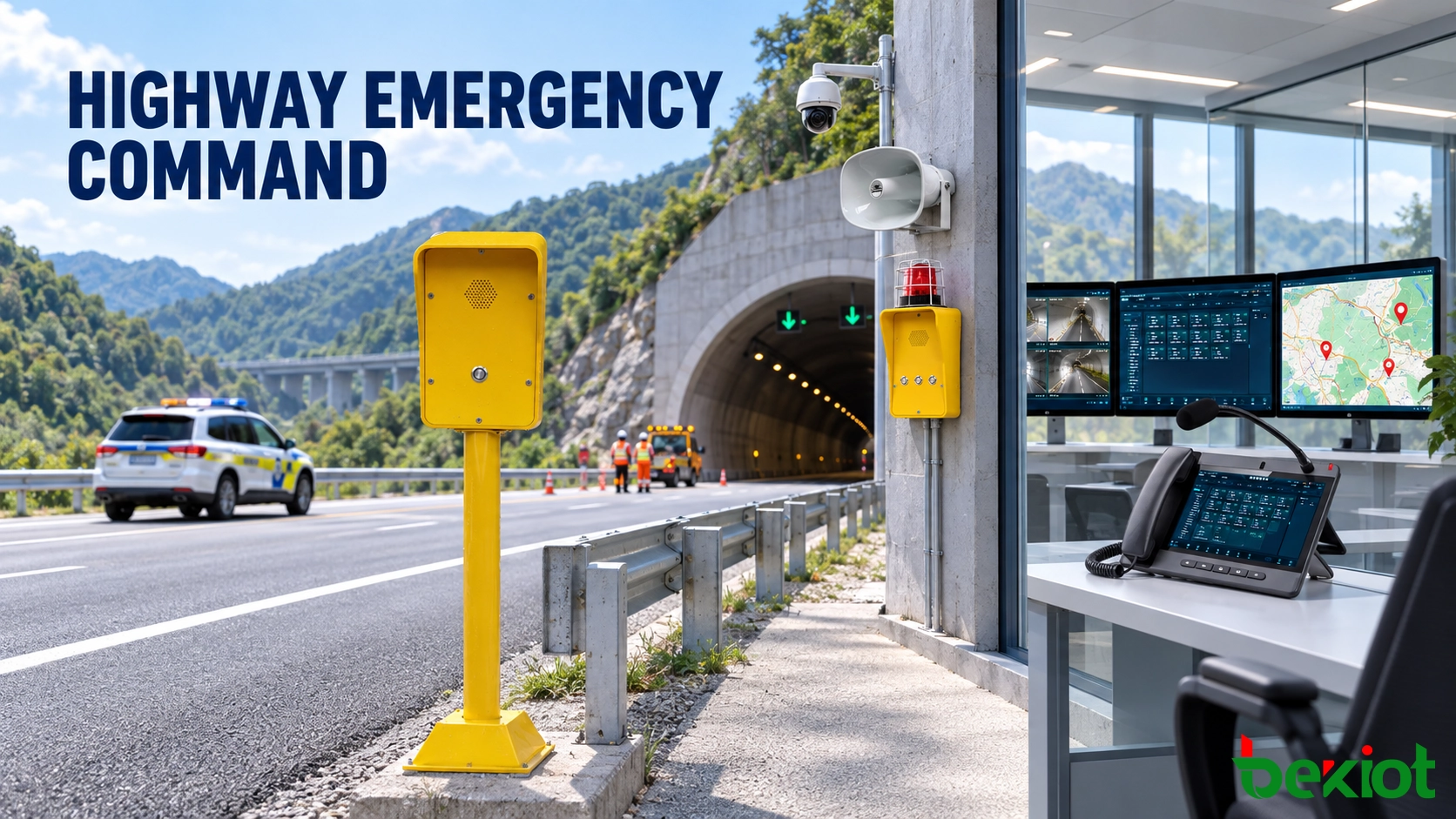
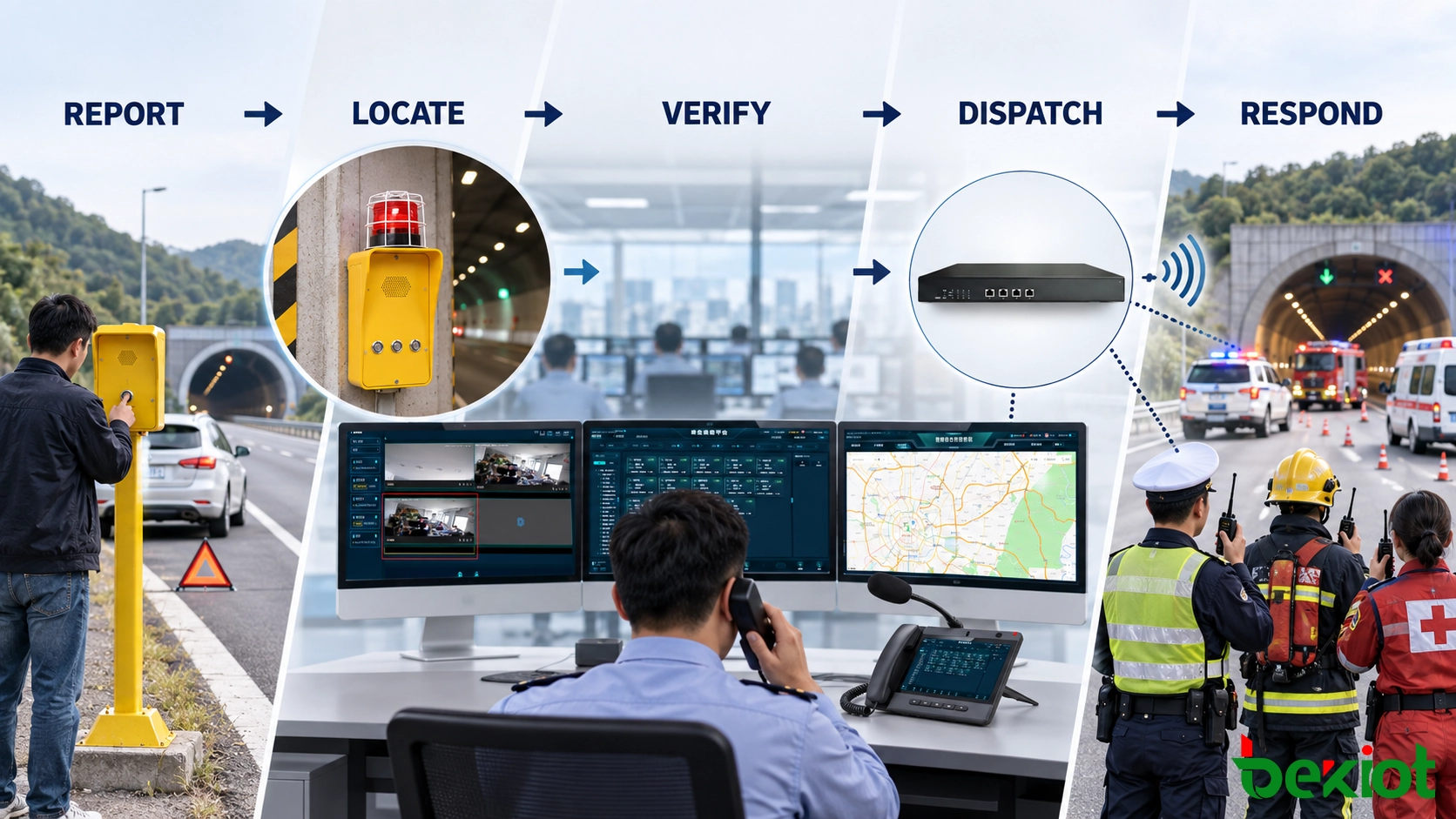
A truck collision inside a tunnel produces several urgent reports: a driver uses an SOS phone, a patrol reports smoke and cameras show traffic approaching the portal. Operators need the bore, travel direction, kilometer marker, affected lanes and safe access route. Verification and notifications should proceed under the emergency plan without unnecessarily delaying urgent assistance.
A highway emergency command system coordinates roadside calls, radio, video and warnings around one incident. The expressway command and dispatch solution from Becke Telcom provides a related integration context. The functions below are project requirements: terminal, gateway, platform and external-system capabilities must be confirmed separately; SIP support alone does not provide them all.
Define responsibilities before configuring routes
A breakdown, hazardous-material spill and tunnel fire need different resources. Tunnels may require contact with stranded drivers, portal warnings, cross-passage information and coordination with fire services. Severe weather may create simultaneous incidents across several road sections. PIARC emphasizes cooperation between tunnel operators and emergency organizations, tunnel-specific preparation and regular training.
Identify the position receiving each report and the organization responsible for field verification.
Define when police, fire, medical, environmental and recovery services are contacted.
Assign authority for lane restrictions, tunnel closure, evacuation messages and reopening under local procedures.
Name the incident owner, escalation contacts, paging zones and position authorized to close the record.
Record these decisions in an incident communication matrix. Keep routine maintenance and toll-station calls separate from emergency handling. A configured emergency queue may provide persistent audible and visual alerts, alternate answering positions and escalation; test actual busy and unanswered behavior rather than assuming that every terminal supplies priority.
Make road positions operationally useful
Associate each fixed endpoint with its verified road, management section, direction, kilometer marker and coordinates. Tunnel records also need the bore, portal, cross-passage and emergency access references. For example, “GXX Highway – KM 128.6 – Southbound – Emergency Phone 03” is more useful to responders than “Extension 8103.”
This is installation-record mapping, not live tracking of a person or vehicle. Confirm the caller’s actual incident location, which may differ from the phone position. Mobile calls, radio identity and a map marker do not automatically supply a precise current position. The location-aware emergency calling workflow explains source, freshness and verification boundaries.
Associate resources without inventing situational awareness
Where supported GIS and video interfaces are configured, an endpoint record can reference cameras, patrol sectors, crossovers, hydrants and access points. Operators may open an associated camera and contact the responsible team. These associations do not infer a fire, select a safe route or authorize a response automatically. Smoke, rain, darkness and obstruction can limit video; retain caller and field confirmation.
Update physical labels, the device directory, GIS records and camera associations after relocation, roadworks, changed tunnel numbering or jurisdiction boundaries. Verify the record at the installed endpoint and keep a usable text description if the map service fails.
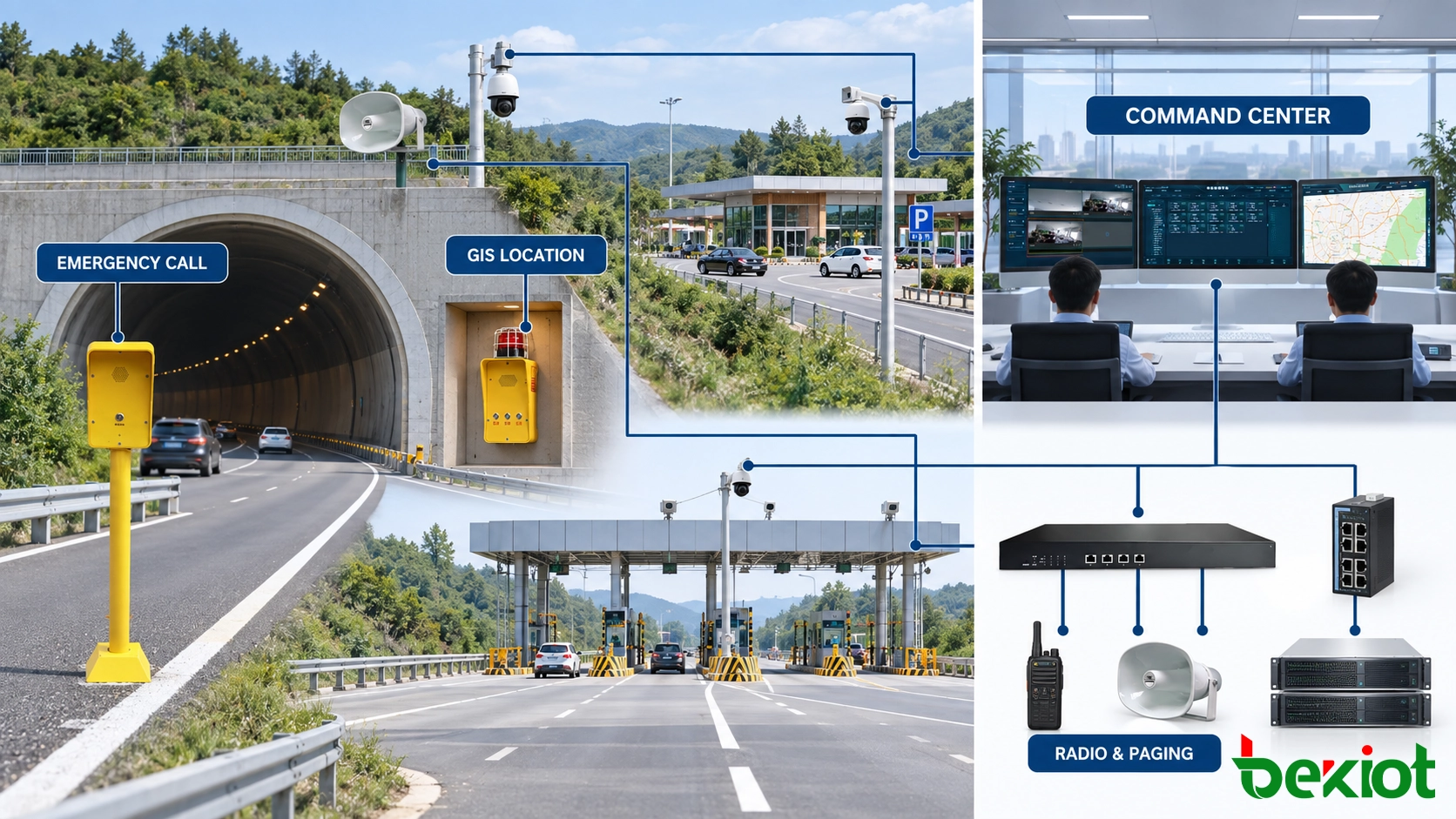
The on-site communication and monitoring resources are organized by road section, direction and operational responsibility.
Integrate telephones and radio according to interface scope
Older sections may retain analog emergency telephones; newer sites may use SIP endpoints. Compatible analog gateways can connect existing lines, subject to checks of electrical interfaces, caller identity, button operation, audio, cable condition, power and fault reporting. SIP endpoints need supported registration, routing and a working media path.
Give fixed calls appropriate destinations
Public SOS points may call a predefined destination on button press or off-hook, while staffed toll stations retain ordinary dialing. Restrict public terminals to authorized destinations. Night routing may transfer an unattended section to a staffed regional center, but original identity and location display must be tested through that transfer.
Keep radio capabilities explicit
Patrols may use DMR, PDT, TETRA or Push-to-Talk over Cellular (PoC). A compatible radio interface or gateway can connect selected channels to dispatch. The BK-ROIP4 radio gateway is one product reference for interface assessment; its presence does not establish compatibility with every radio network.
Basic RoIP may provide audio and push-to-talk (PTT); radio identity, talk-group selection, emergency signaling and status need separate support. Use operational channel names and preserve access rules. Establish telephone-to-radio conferences only when appropriate, control participants and release temporary patches so field channels remain usable.
Coordinate targeted warnings with traffic control
Supported paging integration can address a selected tunnel bore, toll station or service area using reviewed live or prerecorded messages. Emergency priority over routine audio must work through controllers, gateways, amplifiers and speakers. A successful console action does not prove intelligibility at the roadside.
Variable-message signs, barriers, lane signals and ventilation controls remain within their approved operating procedures and authority. A communications interface does not confer permission to operate them. Define request, approval, execution feedback and manual fallback for each linked action; avoid automatic closure or evacuation decisions based on an unverified alarm.
Keep communication and response milestones with one incident
In an illustrative tanker collision near a tunnel entrance, the SOS record identifies the reporting point and direction. A camera shows a blocked lane but cannot reveal the placard. The operator requests patrol verification and alerts authorized traffic-control personnel under the plan. Fire and environmental services are involved as the assessed risk requires; protective measures need not wait for a complete diagnosis.
Record acknowledgement, dispatch, departure, arrival, restrictions and reopening separately. An answered call confirms contact, not completed rescue. Configured incident stages can support handover and review, while each unrelated incident retains its own owner, priority, location and history. Expand public warnings only to the zones required by the assessed event.
Preserve essential local service during an outage
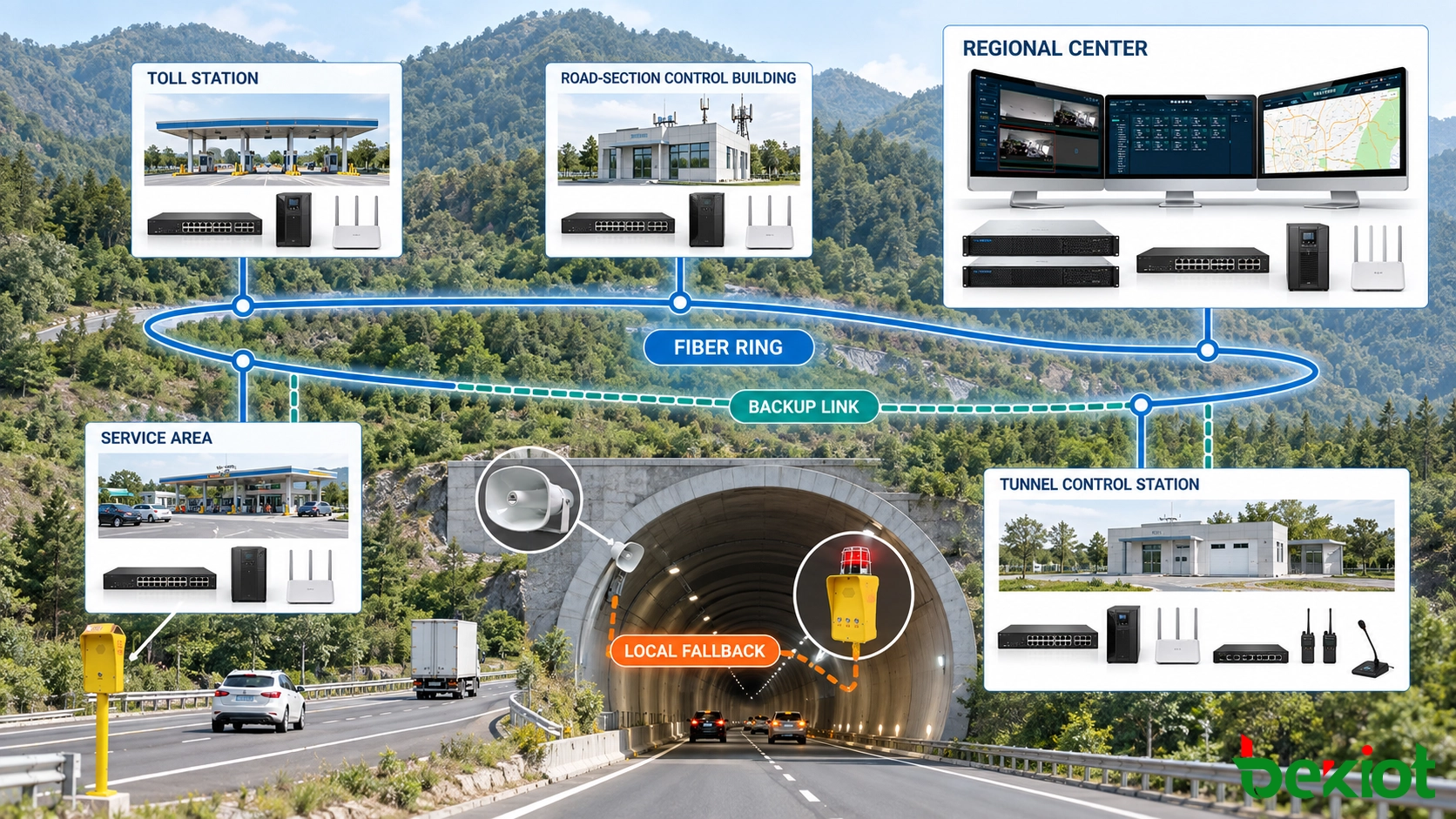
Regional coordination can coexist with section control rooms and local tunnel answering, radio and paging. Specify which services survive loss of the regional link, which require local controllers and which are unavailable. A fallback destination is useful only if staff, signaling, media and power can still reach it.
Review complete failure paths
Two servers can share a failed switch, storage system, building or power circuit. Two links in one duct or roadside cabinet can fail together. Trace physical routes and service dependencies; fiber, cellular and radio labels do not prove failure independence. Test backup capacity and coverage under the intended failure.
Include servers, databases, recording storage, core switches and roadside access equipment.
Check fiber routes, tunnel entry points, radio controllers, gateways, consoles and local paging controls.
Size backup power for all required equipment and verify authentication, DNS, time service and licensing dependencies.
Fallback testing should include new calls, active-call interruption, radio access, speaker output, record timestamps and controlled return to normal service. Do not promise seamless switching. Document local control ownership and handover so central recovery does not create conflicting commands.
Test inside the tunnel environment
Traffic, ventilation noise, reverberation and restricted radio propagation affect communication. PIARC describes dedicated tunnel radio infrastructure; a dispatch gateway alone does not extend radio coverage. Test portals, cross-passages, equipment rooms and long-bore locations under representative conditions using complete spoken instructions, with exercises coordinated to protect road users.
Commission scenarios and control operational permissions
Run a roadside SOS call through position confirmation, patrol contact and unanswered escalation. Add tunnel camera access, the correct bore’s paging and field radio checks. Test simultaneous incidents, loss of GIS or video, central-server failure, link interruption and power loss. Measure recovery and record unavailable functions; status icons alone cannot prove two-way speech or intelligible warnings.
Separate operator, supervisor and maintenance roles. Use individual accounts, controlled configuration changes and additional confirmation for high-impact actions where the operating plan requires it. Apply appropriate access, retention and export rules to recordings and incident information.
Handover records should identify devices, road positions, numbers, addresses, radio resources, paging zones, contacts, permissions, fallback paths and the location of each configuration rule. The command and dispatch systems category provides a broader system overview; acceptance criteria must remain specific to the highway and its agencies.
FAQs
Can ordinary mobile callers reach the control room?
A compatible public-network trunk or authorized telephony interface may route them to staffed positions. Confirm the arrangement locally. Mobile calls do not automatically provide the fixed endpoint’s verified road record; ask for the road, direction and visible marker when necessary.
How can external rescue agencies join coordination?
Authorized telephone, SIP or supported radio connections may provide access without a permanent platform client. Confirm availability, permissions and audio before relying on them; the organizer controls participants and ends temporary connections after coordination.
How should temporary roadworks be represented?
Use reviewed, time-limited groups containing the responsible supervisor, patrols, call points and warning zones. Update access restrictions and location records, then expire or revalidate the group when work ends.
Can warnings be multilingual?
Supported paging systems can use reviewed recordings in relevant languages. Verify consistent lane directions, bore references and evacuation instructions, and test language selection without changing the intended zone.
References
PIARC’s emergency-response guidance supports tunnel-specific planning and agency coordination. Its public address guidance explains user warnings, and its radio communication guidance describes tunnel radio infrastructure. These references do not certify a proposed installation.