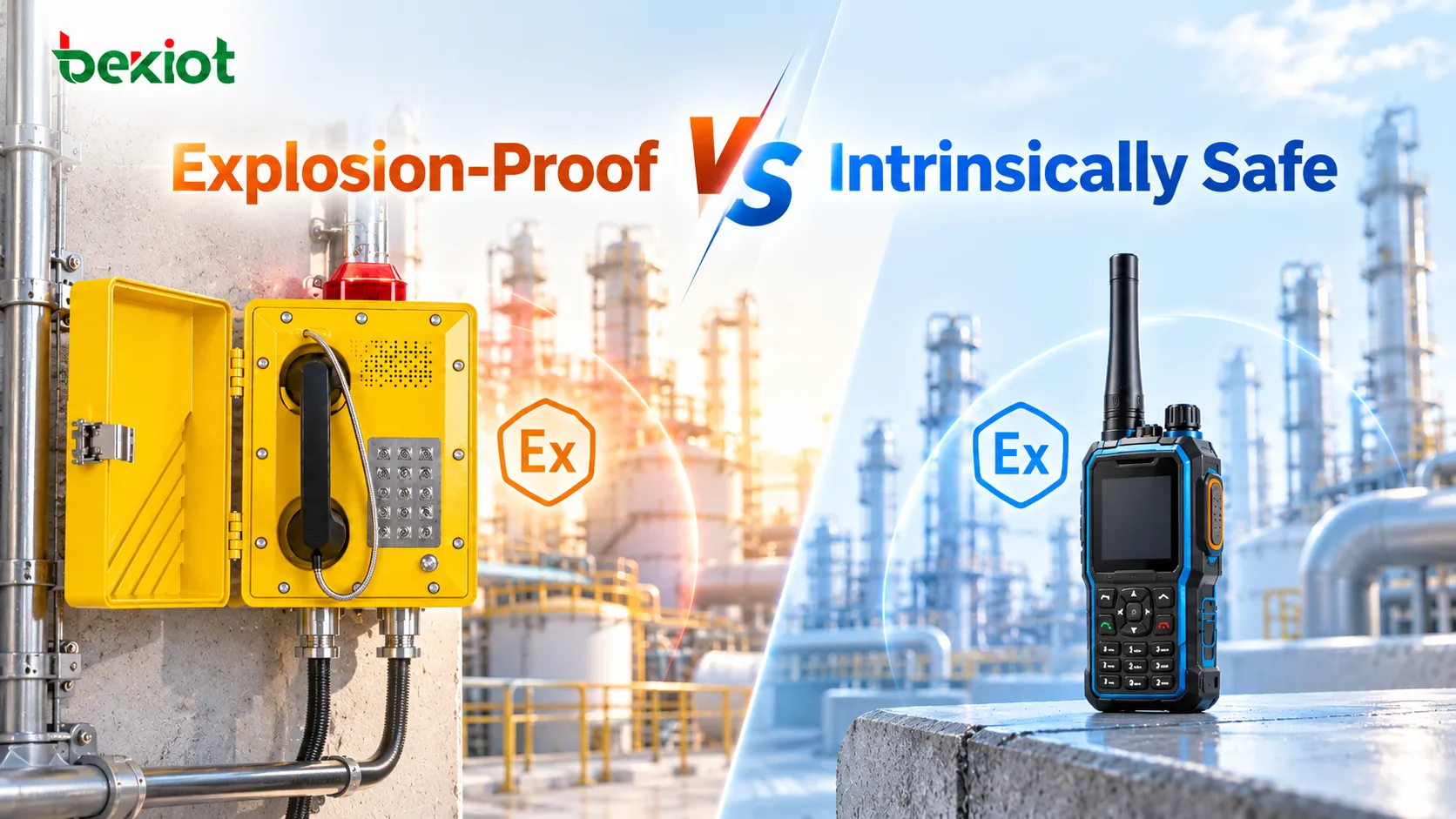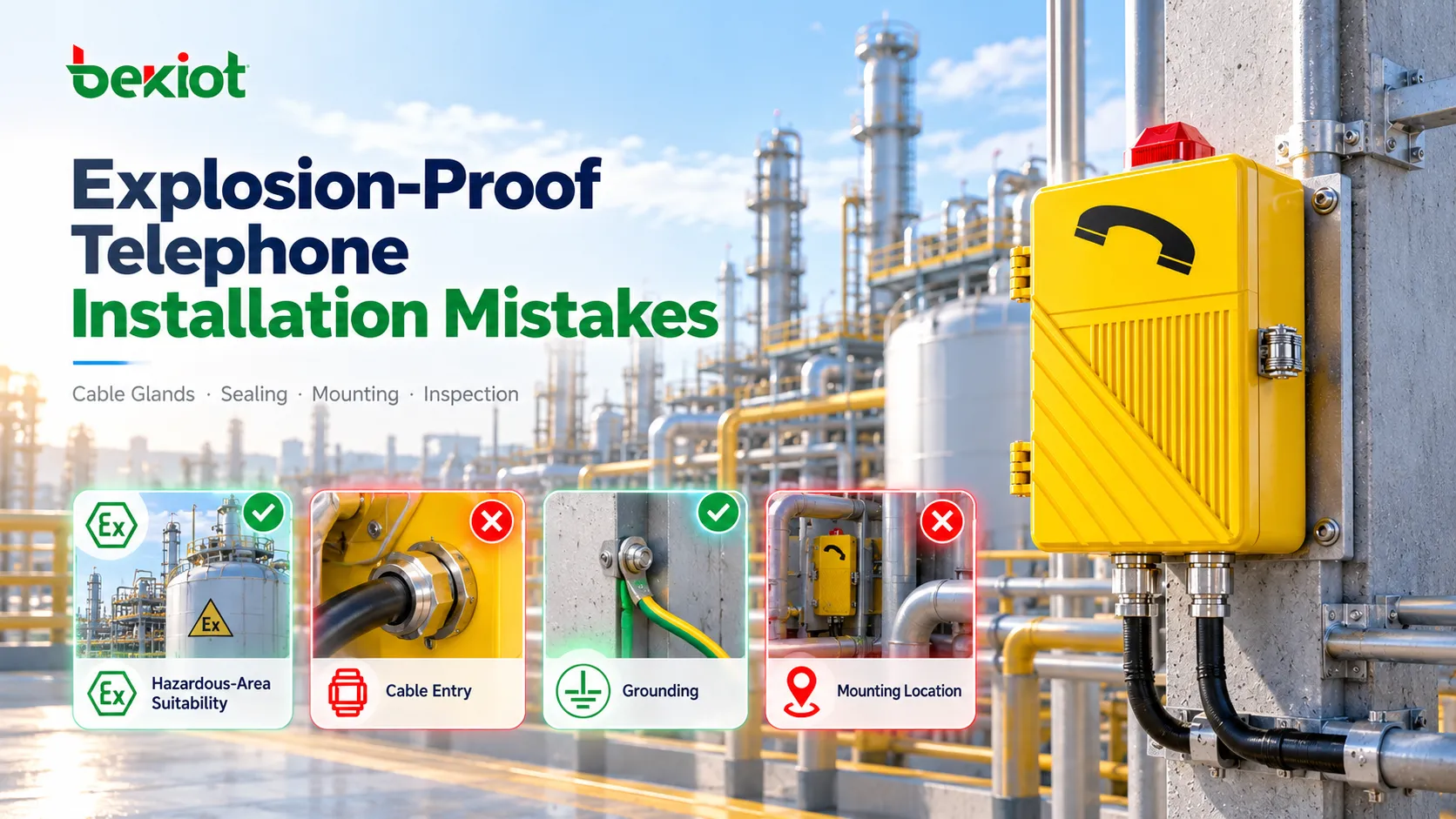


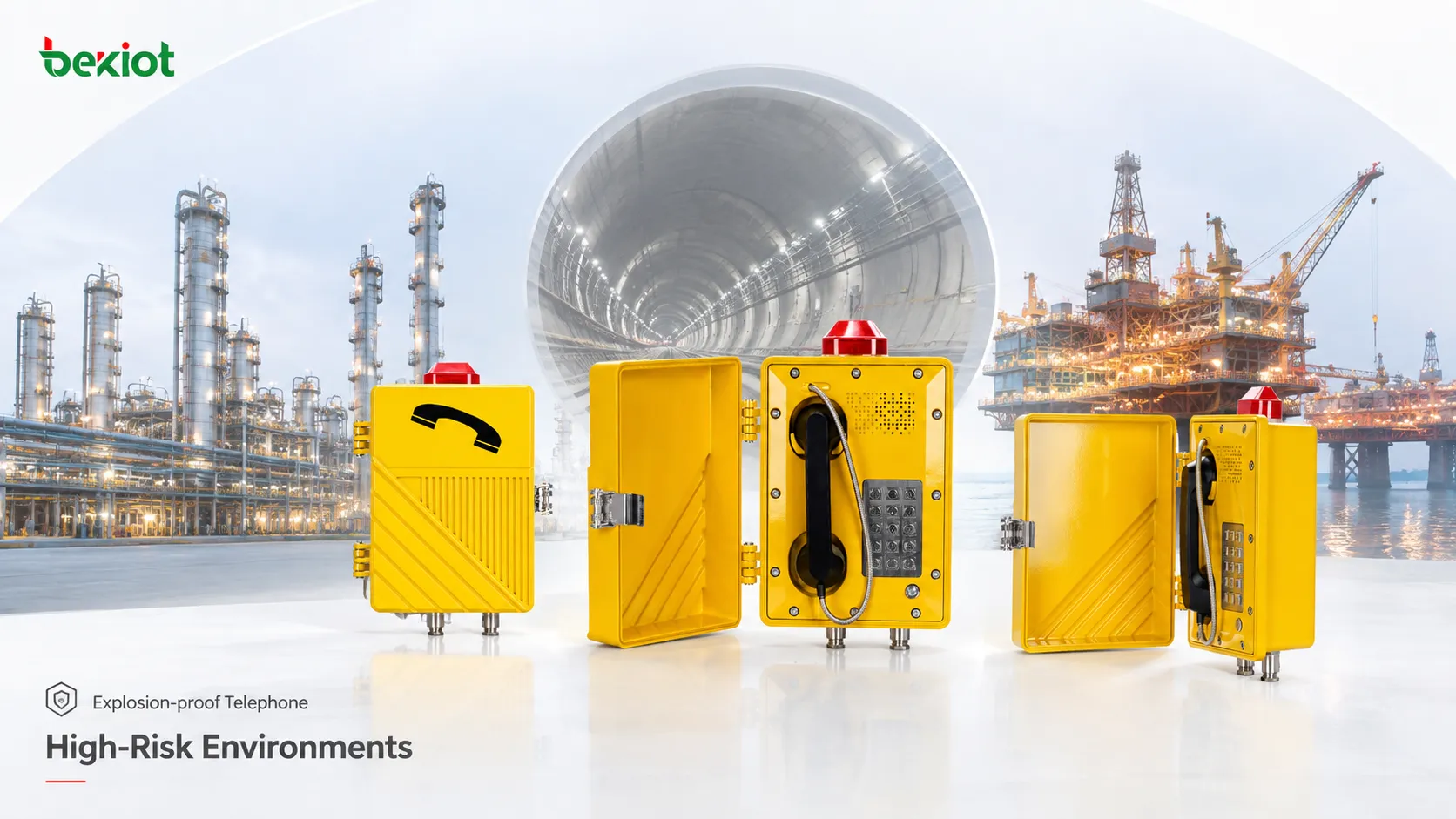
Some communication points only need to be convenient. Others must remain safe when the surrounding environment is already dangerous. Explosion-proof telephones belong to the second category. They are installed in places where ordinary communication devices may not be suitable because flammable gas, vapor, combustible dust, moisture, corrosion, impact, or heavy industrial operation may be present.
The value of an explosion-proof telephone is not limited to making a call. It gives workers a fixed and recognizable voice access point in high-risk areas. When a leak, alarm, equipment fault, blocked route, abnormal sound, fire risk, or evacuation demand appears, personnel can contact the control room quickly. The control room can also call back to confirm the situation, guide response actions, or coordinate field teams.
Risk-Driven Application
The first principle is simple: explosion-proof telephones should be considered wherever the communication device may be exposed to an explosive or hazardous atmosphere. This may include gas, vapor, mist, combustible dust, or mixed industrial contamination. In these environments, a normal telephone can create uncertainty because its enclosure, circuit, cable entry, handset, and switch structure are not designed around hazardous-area safety.
High-risk environments also have another feature: communication delays can become costly. A worker may need to report a gas smell, a damaged valve, a blocked conveyor, water ingress, abnormal pressure, or a fire alarm. If the nearest communication point is far away, unclear, unreliable, or not allowed in the hazardous zone, response time becomes longer. A fixed explosion-proof telephone shortens that communication path.
These devices are usually selected together with site classification, environmental exposure, protection requirements, communication platform, cable route, maintenance method, and emergency workflow. In other words, the question is not only “Can this phone make calls?” The better question is “Can this phone remain safe, reachable, and understandable in this exact risk area?”
Becke Telcom can be lightly considered in such projects when industrial sites need fixed hazardous-area voice communication that connects with dispatch, emergency calling, or field operation systems. The equipment should always be matched with the real site risk rather than selected only by appearance.
Oil, Gas & Chemical Sites
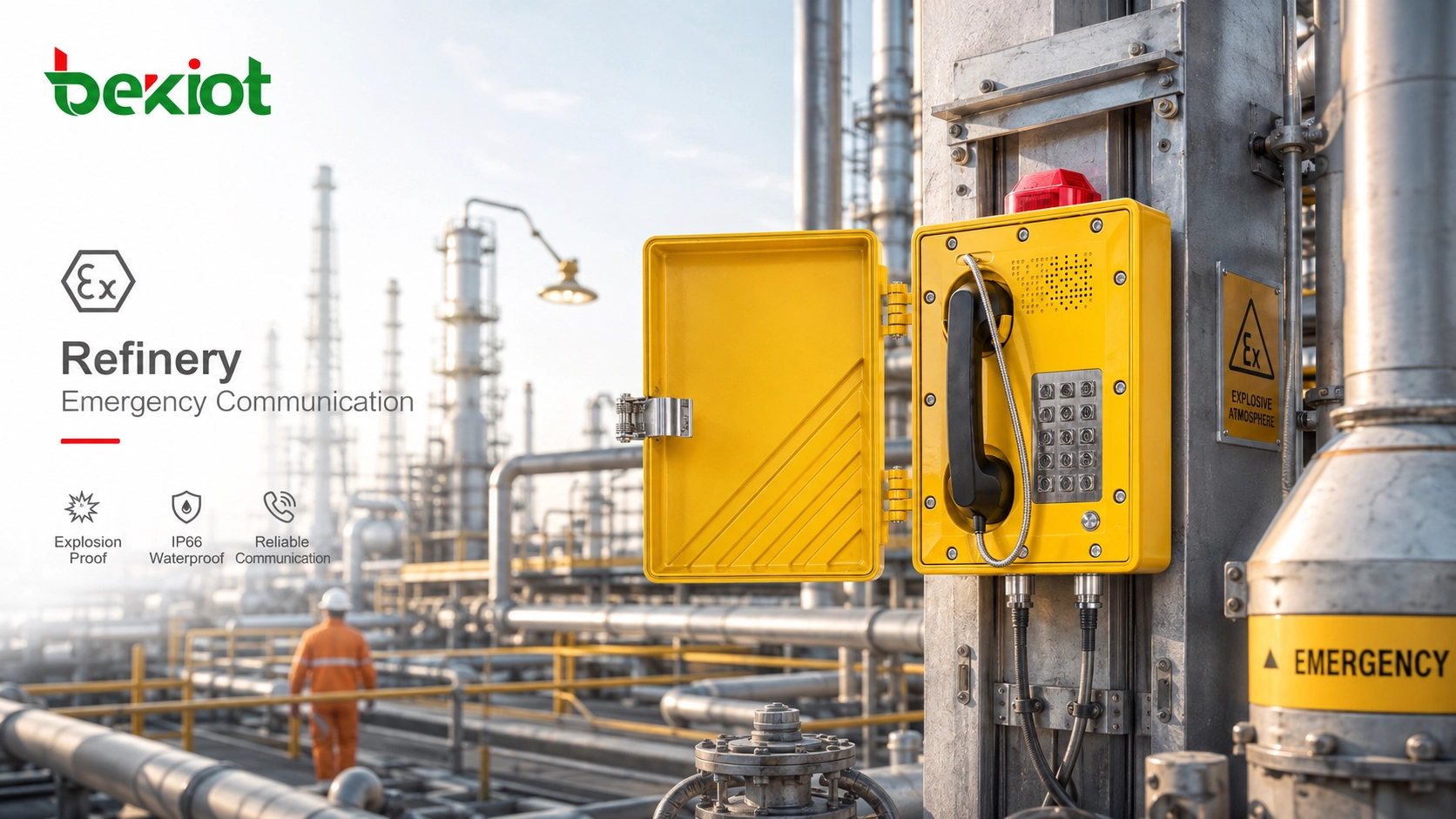
Oil and gas facilities are among the most typical application environments. Refineries, tank farms, gas compressor stations, LNG facilities, fuel depots, loading platforms, drilling sites, and pipeline stations may contain flammable gases or vapors. In these areas, communication equipment must be selected carefully because the surrounding atmosphere may become dangerous during leakage, maintenance, sampling, loading, or abnormal operation.
Explosion-proof telephones can be installed near process units, pump areas, valve stations, storage tanks, loading bays, control points, and emergency exits. Their role is to provide reliable communication when workers need to report an abnormal condition or receive instructions. In large facilities, mobile signal may be unstable, radios may be busy, and ordinary office phones may be too far from the field. A fixed telephone gives operators a known point of contact.
Chemical plants have similar but often more complex requirements. Different production areas may involve flammable vapor, corrosive chemicals, high humidity, high temperature, cleaning water, or strict operating procedures. A communication device must not only meet explosion-proof needs but also survive the local environment. Enclosure protection, material selection, cable sealing, corrosion resistance, and maintenance access all influence long-term performance.
In these industries, the telephone is often part of a broader emergency communication system. Calls may be routed to the control room, recorded for incident review, displayed with location information, or linked with alarm and dispatch workflows. This makes the telephone more than a field device; it becomes a communication node in the safety management chain.
Mining & Dusty Environments
Mines are another important application field. Coal mines, metal mines, non-metal mines, underground roadways, shaft stations, pump rooms, substations, belt conveyor points, refuge chambers, and maintenance areas may all require rugged voice communication. In coal-related environments, gas and combustible dust can increase safety requirements. In other mining environments, moisture, impact, vibration, long routes, and limited wireless coverage also make fixed telephones valuable.
Explosion-proof telephones provide location-based communication. A call from a fixed point tells the control room where the user is calling from, which is useful during emergencies. In underground conditions, a short message such as “water near pump station” or “smoke at conveyor transfer point” becomes far more useful when the communication point is already associated with a known location.
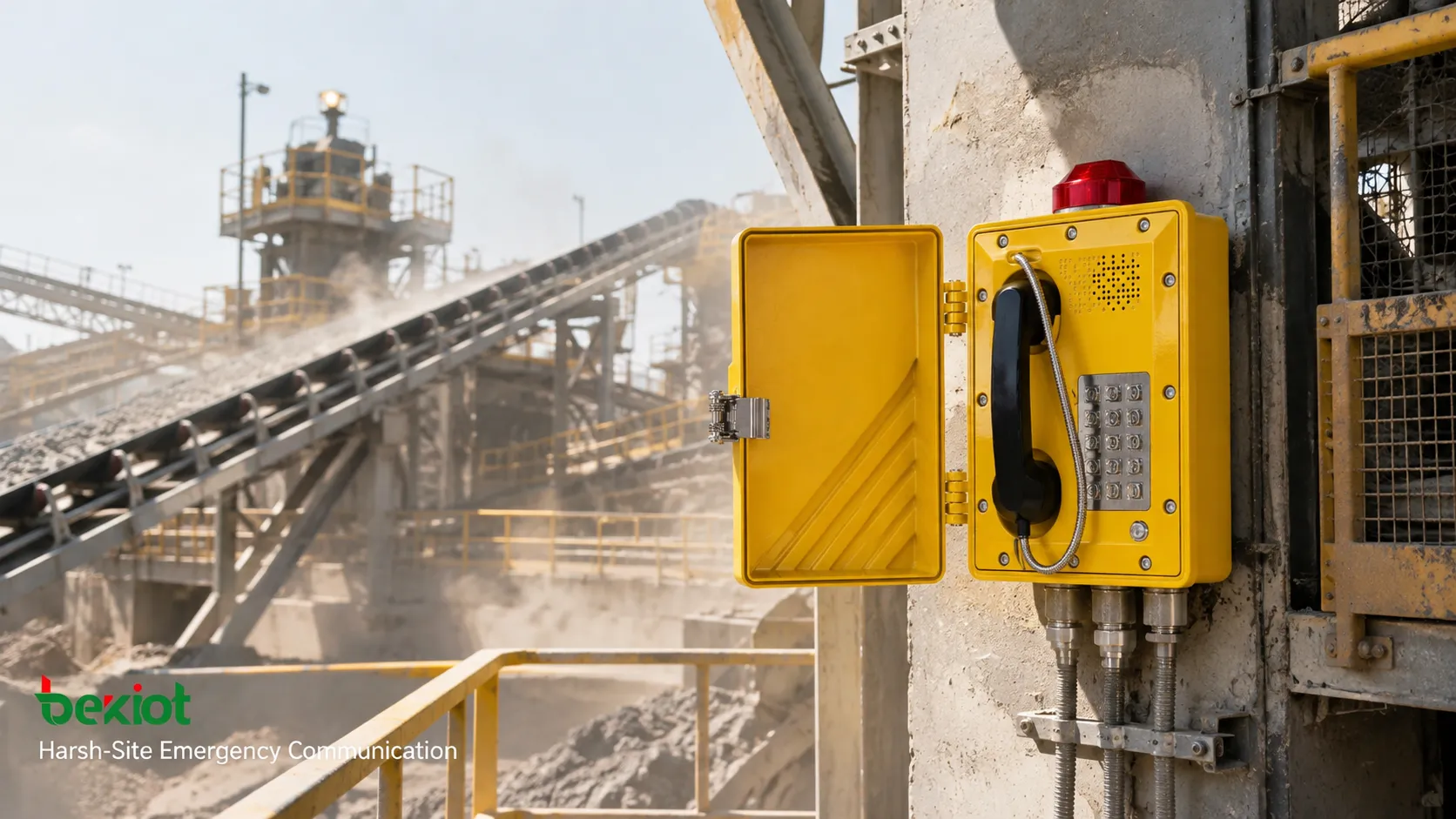
Dusty industrial workplaces outside mining also need attention. Cement plants, grain processing facilities, coal handling systems, powder workshops, metal processing areas, and bulk material terminals may generate fine dust. Dust can enter ordinary devices, block acoustic openings, damage switches, and combine with moisture to cause corrosion or leakage paths. Explosion-proof and industrial-grade structures help protect the internal circuits, buttons, handset, speaker, and microphone path.
In such environments, voice clarity is just as important as safety. The worker may be speaking near conveyors, crushers, fans, motors, vehicles, or ventilation systems. A rugged enclosure is not enough if the call cannot be understood. The telephone should be tested under normal site noise conditions, not only in a quiet commissioning room.
Tunnels, Power & Infrastructure
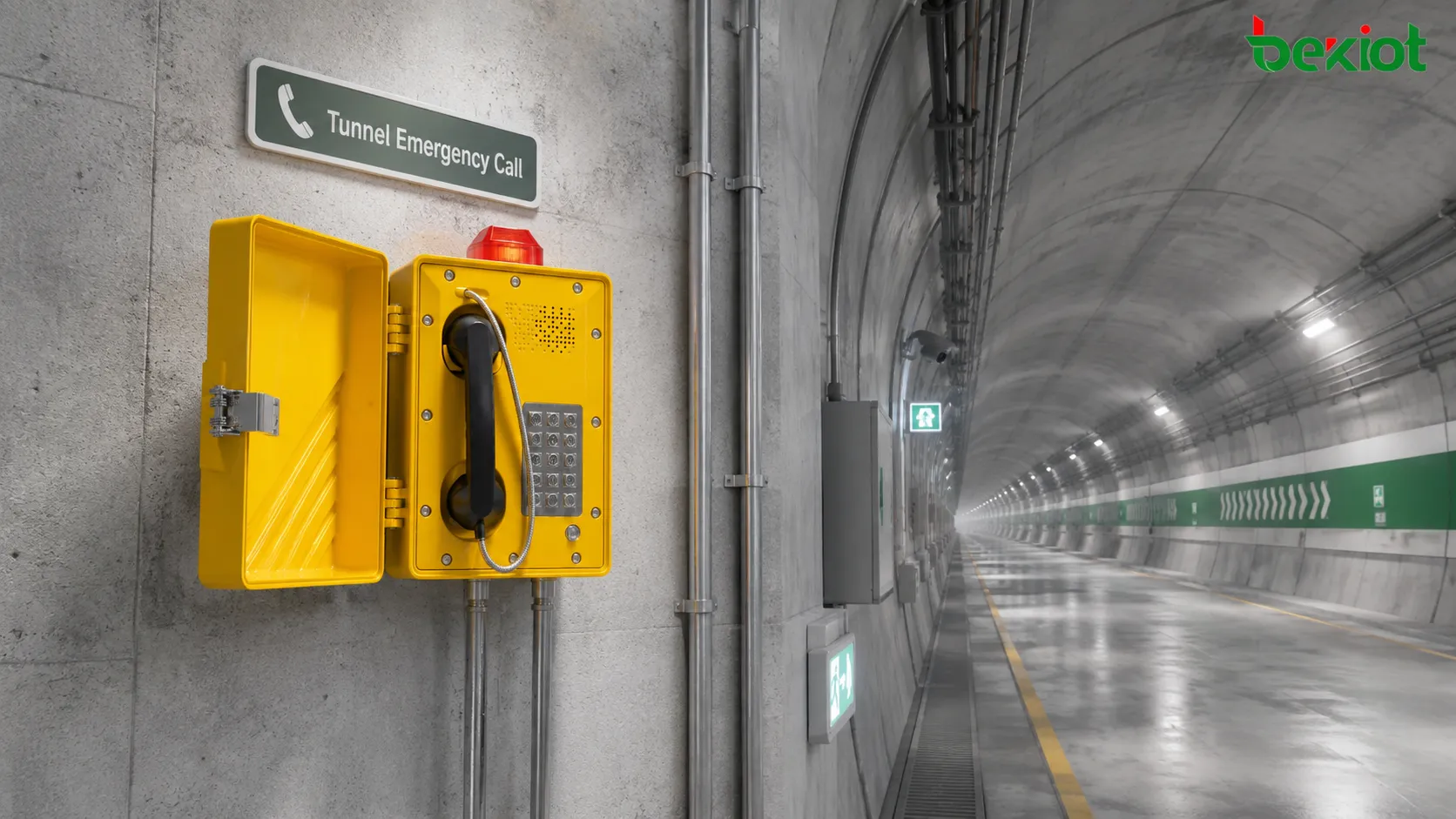
Tunnels and underground infrastructure often require fixed emergency communication points. Road tunnels, railway tunnels, metro sections, utility corridors, underground parking facilities, and service galleries may have long routes, limited visibility, echo, moisture, dust, and restricted access. During an incident, workers or users need a simple communication point that can reach the control center without relying on personal devices.
Explosion-proof telephones may be used in tunnel environments where hazardous gases, fuel vapor, dust, or fire risk must be considered. Even when the site is not classified as highly explosive, industrial-grade protected telephones are often chosen because of moisture, impact, cleaning, noise, and emergency response requirements. The device should be easy to identify, easy to operate, and installed at logical intervals along the route.
Power and energy sites also create demand. Power plants, substations, battery energy storage areas, boiler rooms, fuel handling areas, coal yards, hydrogen-related zones, and maintenance workshops may all include high-risk communication points. The telephone may support routine operation, inspection contact, fault reporting, and emergency coordination.
Large public infrastructure sites need communication reliability because incidents can affect many people. A fixed field telephone may connect to a control room, dispatch platform, public address system, or emergency response workflow. In this type of application, installation planning matters. Mounting height, signage, lighting, cable route, and call destination should be designed for real use under pressure.
Key Takeaways
Explosion-proof telephones are applicable to high-risk environments where safe, durable, and reliable voice communication is required. Typical sites include oil and gas facilities, chemical plants, mines, dusty industrial areas, tunnels, power plants, fuel storage zones, offshore platforms, process workshops, and emergency field communication points.
The selection should be based on actual risk. Buyers should review hazardous-area requirements, gas or dust exposure, moisture, corrosion, impact, noise level, installation position, communication platform, and maintenance access. A suitable telephone should remain safe in the environment, easy to use during emergencies, and clear enough for practical field communication.
For industrial projects that need explosion-proof telephones for hazardous-area voice access, Becke Telcom provides communication options for field calling, emergency reporting, and control room coordination. The final configuration should be selected according to site classification, environmental conditions, system integration needs, and long-term maintenance planning.
FAQ
Where are explosion-proof telephones most commonly used?
They are commonly used in oil and gas facilities, chemical plants, mines, tunnels, fuel depots, offshore platforms, power sites, dusty workshops, and hazardous industrial zones.
Why not use ordinary telephones in these areas?
Ordinary telephones are not designed for explosive atmospheres, combustible dust, harsh impact, sealed cable entry, or hazardous-area safety requirements. They may be unsuitable or non-compliant.
Are explosion-proof telephones only for emergencies?
No. They can support routine operation, maintenance contact, dispatch communication, equipment coordination, and emergency reporting. Regular use also helps confirm that the device remains functional.
What factors affect model selection?
Important factors include hazardous-area classification, protection level, enclosure material, cable entry, voice clarity, installation location, interface type, dispatch integration, and maintenance requirements.
Should the telephone be tested after installation?
Yes. Testing should include call routing, voice clarity, handset function, speaker output, cable sealing, mounting stability, control room response, and real-site noise conditions.